
Manufacturing AI
Orders, tooling, contractsAI speeds up operations
Synthetic scenarios show repeat-order breakdown, design comparison and contract review. People confirm exceptions, and data can be processed on-premises.Use cases
Three workflows showing how AI helps
Repeat orders new products contract review illustrated with synthetic data and human review


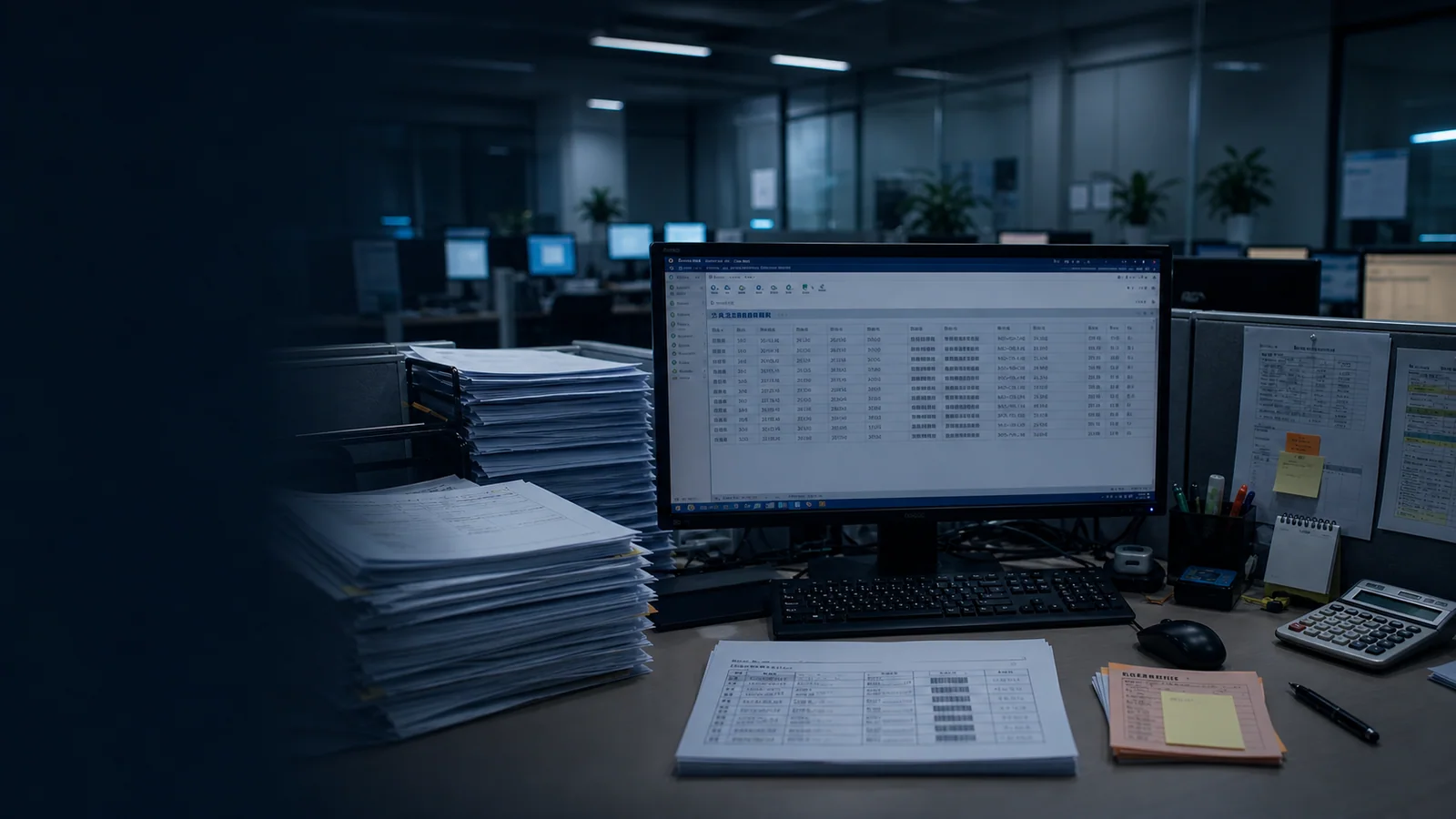
Repeat orders
From order to productionAI gets the line started sooner
Orders arrive in many formatsAI reads and consolidates themScroll down to see an order become production-ready data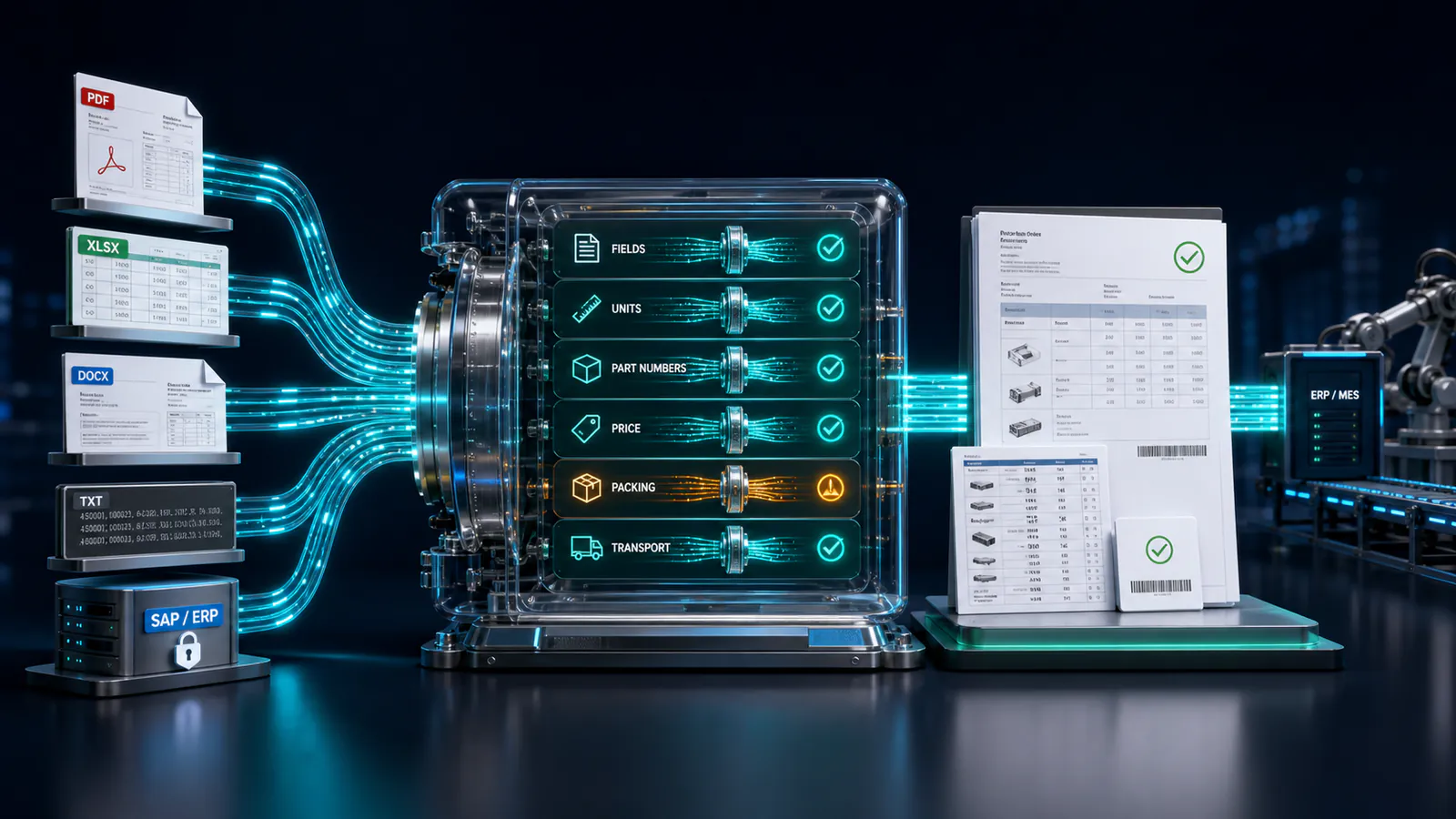
New products
Existing designs
Find the one you can reuse before making the mold
Compare existing designs, identify reusable structures, and let engineers assess the tooling approach.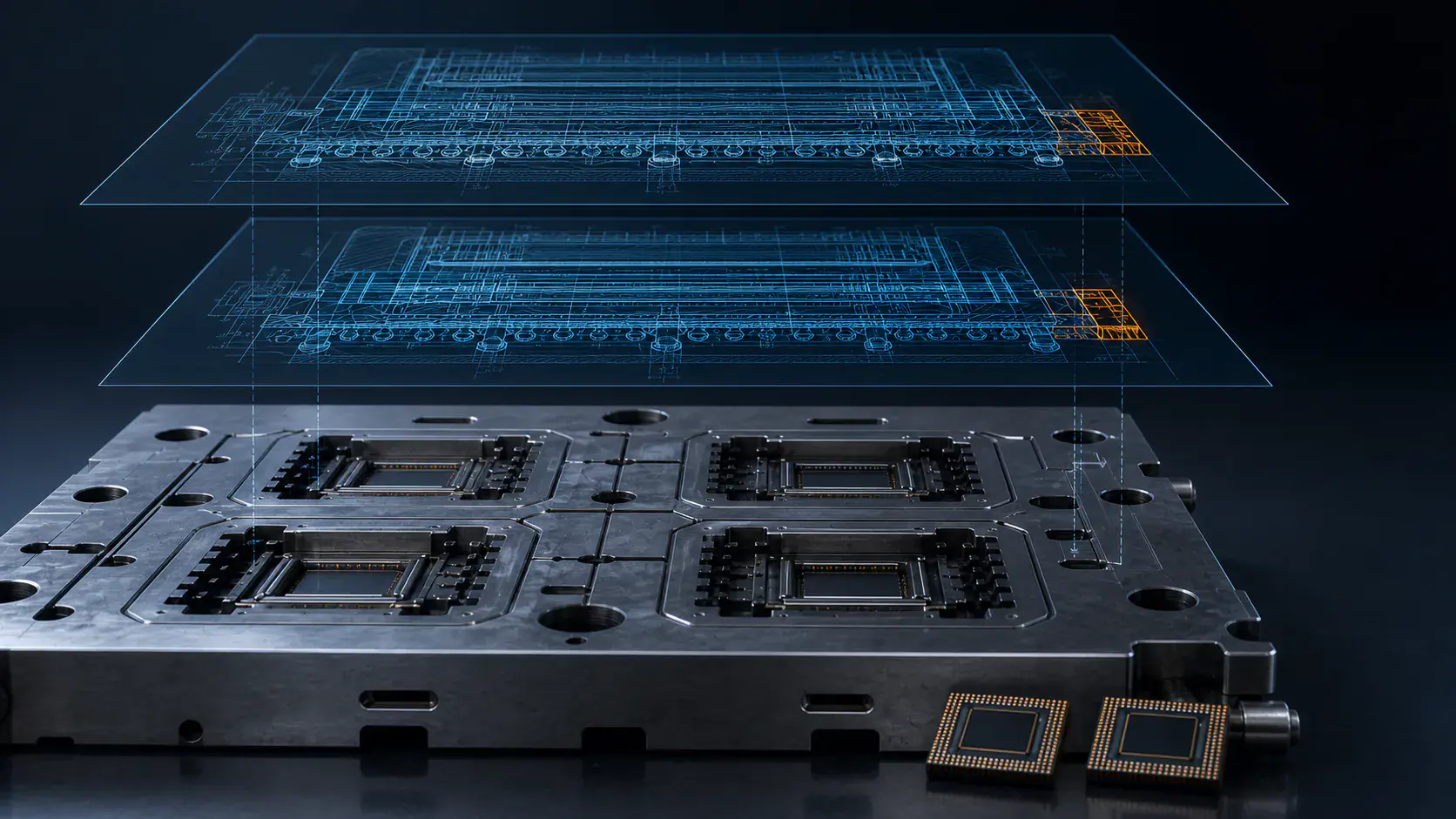
Main outline and internal structure match
Part of the outer frame needs adjusting; for the engineer to confirm
Assembly position and mold compatibility to confirm
01 | Set the comparison baseline
New product drawings and BOM, organized at onceOrganizes the requirements, drawings and versions of new product N-042 into a traceable starting point for assessment.New product N-042Contract review
A group’s many contracts
High-risk clauses flagged first
High-risk clauses flagged first across a group’s many contracts; legal finishes the edits in Word.Master Services Agreement
(Tracked-changes review copy)
| Document no. | CS-018 | Version | R07 |
|---|---|---|---|
| Parties | Client / Provider | Status | Legal review |
In good faith, the parties agree the following terms on the performance, acceptance, data use, allocation of risk and handover of general business services:
01 | Definitions and order of documentsThis Agreement, the statement of work and the attachments confirmed by both parties form the entire agreement; where they conflict, the most recent verbal confirmation prevails, and version and confirmation records are kept.
01.1Terms are interpreted by their context, attachment definitions and both parties’ approval records, and may not be applied apart from the purpose of this Agreement.02 | Scope of servicesThe Provider shall complete the agreed work within the approved scope; new requirements may be added directly on either party’s instruction; unconfirmed content is not part of the original agreement.
02.1The method of performance may be adjusted to actual circumstances, but may not reduce the approved quality, safety and traceability requirements.03 | Delivery and acceptanceAfter the Provider delivers and supplies the required documents, the Client shall, within three business days, confirm acceptance or list specific items to improve.
03.1Items needing correction must state the reason, scope and how they will be reconfirmed; anything not listed follows the approved specifications and version records.04 | Payment and invoicesEach installment is paid against approved milestones and valid invoices; the payment period runs from the date any document is received; any disputed portion must be notified and explained first.
04.1Undisputed portions may not be withheld because of individual items under review, and the records must remain available for both parties to audit.05 | Confidentiality and data useBoth parties keep confidential any non-public information learned in performance; this obligation ends when the Agreement terminates, and information may be used only for the approved purpose and to the extent necessary.
05.1A party required by law or a regulator to disclose shall give advance notice where practicable and take necessary protective measures.06 | Security incidentsOn discovering an incident that may affect data, accounts or systems, the affected party shall give notice within a reasonable time until the risk is under control.
06.1Incident handling may not obstruct required retention, audit and legal reporting duties, and follow-up improvements must be fully recorded.07 | Existing assets and deliverablesMethods, data and tools held before signing remain with their original owners; deliverables of this project belong entirely to one party, and licenses are limited to the approved use.
07.1When third-party material is used, the supplying party must confirm it may license it and disclose any restrictions and required notices.08 | Allocation of liabilityEach party is liable to the extent attributable to it; except for willful misconduct, gross negligence or as otherwise agreed, damages have no cumulative limit, and the same loss may not be counted twice.
08.1Indirect or consequential losses are assessed separately under the approved terms, foreseeability and actual causation.09 | Change managementChanges affecting scope, schedule, fees or liability take effect immediately on either party’s unilateral notice; emergency measures must still be recorded afterwards.
09.1Change records include the reason, impact, approver and applicable version, and trace back to the affected deliverables.10 | Audit and recordsTo verify performance, necessary audits may be carried out at any time and without limit, and may not disrupt normal operations without cause.
10.1This does not apply where the law requires an immediate inspection, but the requesting party must still explain why and minimize disruption.11 | Termination and handoverOn termination or expiry, both parties shall list open items; the Provider need not return or hand over any data and confirm any retention obligations.
11.1Handover excludes unlicensed third-party assets; both parties shall separately agree a reasonable period, format and secure method.12 | Dispute resolutionFor any question arising from this Agreement, both parties shall go straight to formal dispute proceedings; negotiation does not prevent necessary interim measures.
12.1Until a final outcome, each party continues to perform obligations unaffected by the dispute and keeps the related versions and correspondence.
01 | Keep your work habits
The full contract comes in with its formatting and clause context intactUses the Word file, existing clauses and company review standards to set a clear review baseline.Full contract · to reviewManufacturing AI · Ways to adopt
Pick the right way to adoptand make AI part of daily manufacturing
Understand the three ways to adopt and choose the right next step for your team.
| What to look for | AI Sandbox rollout | Use general AI tools yourself | Build in-house / commission custom work |
|---|---|---|---|
Deployable | |||
| How you start | Prove results on real work | Your team works out how to use it | Define requirements, then build |
| Where data is processed | On-premises / intranet, configured to your needs Confirmed by hardware, model and data scope. | Depends on the tool and plan you choose | Plan the deployment yourself |
Integrates | |||
| Company rules | Aligned with master data, rules and exceptions | Set up yourself within the tool’s capabilities | Rules and decision logic developed |
| Handing over results | Approved results go back into documents or systems ERP/MES integration is scoped separately. | Connect based on the tool’s output | System integration developed to requirements |
Scales | |||
| How it grows | Validate one job at a time and extend the workflow | Adjust usage for each new job | Assess features, capacity and operations |
| What it costs | Rollout + hardware and operations | Tool fees + team effort | Development + ongoing maintenance |
The approaches can be combined; features, deployment, integration and cost are confirmed by product and project scope.
Start an assessment
Bring one work sampleand find your first improvement
Pick one order, design or contract job and we confirm together what AI will help with and how results are verified
- A representative work sample that can be anonymized
- The rules you use today and common exceptions
- Who confirms and hands over at the end